
Shoot & Hide
CrazyLabs LTDAction
4.5591.00 Reviews
- Version
- 1.11.1
- Installs
- 5.00M
- Age Rating
- Teen
Screenshots
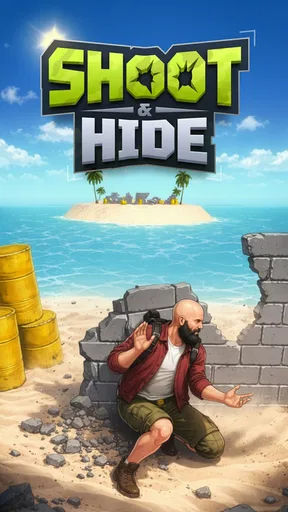
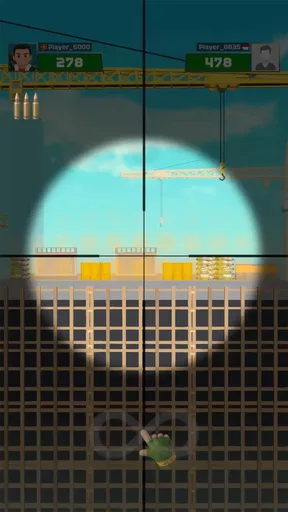
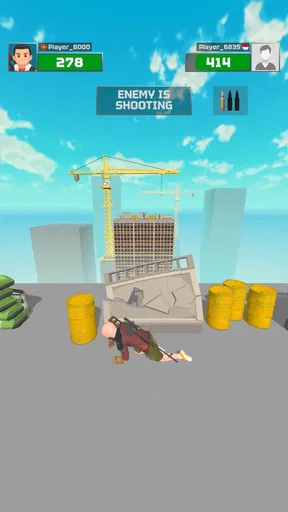
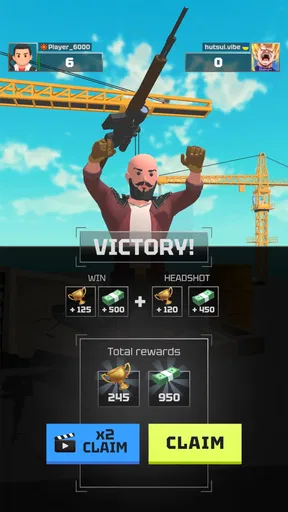
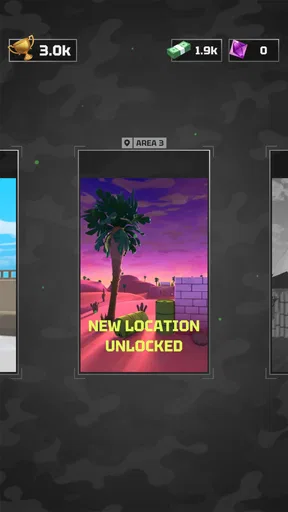
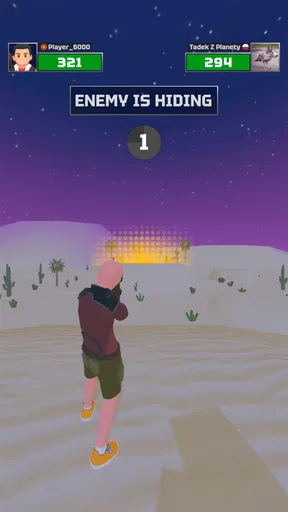
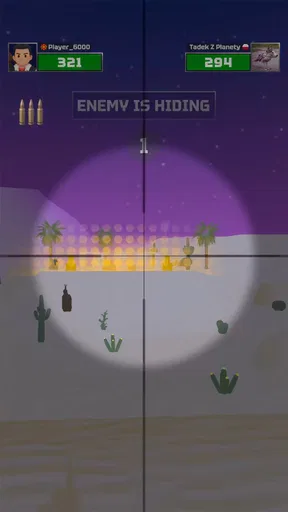
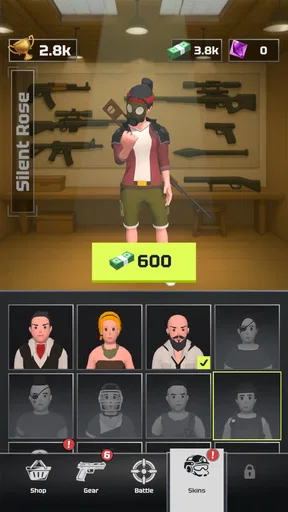
Our Review of Shoot & Hide
 Analysis by Appyee
I went into Shoot & Hide expecting a quick action game built around a simple idea: fire when the opening appears, then disappear before danger catches up. That basic loop is easy to understand, but the real appeal comes from how quickly it asks me to make decisions. I am not only watching for a target; I am also judging when continuing to shoot is worth the risk and when hiding is the smarter move.
That makes it a good fit for short sessions. I can pick it up when I have a few spare minutes without needing to remember a complicated story or a large set of controls. At the same time, the game is not completely mindless. Its central tension comes from switching between aggression and caution, which gives each attempt a little more purpose than a simple tap-to-attack experience.
CrazyLabs LTD is the developer, and the game sits in the action category with a Teen content rating. It is free to download, although optional in-app purchases range from around one dollar to around one hundred dollars per item. I would keep that pricing range in mind before handing the phone to a younger player, especially because the fast pace can make any purchase prompt feel more urgent than it really is.
Where the experience can become confusing
The first place I would expect some players to get stuck is the relationship between shooting and hiding. The store’s short description is only “Shoot & Hide,” but that phrase leaves out an important practical question: should I attack whenever I can, or should I treat every shot as a risk? In my experience with this kind of design, the second approach is usually more useful. Firing immediately may feel productive, but a rushed attack can leave me exposed at exactly the wrong moment.
I found it more helpful to read the screen as a sequence of opportunities rather than as a constant invitation to tap. A safe opening is valuable, but it is not automatically the right opening. If I am already under pressure, taking one extra moment to understand where safety is available can matter more than squeezing in another shot. That is the first non-obvious lesson here: survival decisions often matter more than fast fingers.
Another possible sticking point is the expectation that the game will behave like a traditional shooting game. It is better understood as a compact action challenge where timing and positioning are closely connected. Players who want extended exploration, a deep campaign, or a large collection of weapons may find the design too narrow. Players who enjoy repeated attempts and quick reactions are more likely to appreciate its focus.
The Teen rating is also worth treating as practical guidance rather than decoration. The action is built around danger and shooting, so this is not the first game I would choose for a very young child. For a teenager or adult who wants a brief action session, the rating feels easier to understand in context. I would still check the device before lending it out, particularly because the free download includes optional purchases.
What I check before blaming the game
When a fast game feels unresponsive, I first separate a control problem from a timing problem. A missed action does not always mean the tap failed. Sometimes I pressed while the game was asking me to wait, or I reacted to the visible threat instead of the safer route. Before changing settings or reinstalling anything, I give myself a few attempts focused only on observing the rhythm.
I also avoid judging the whole experience from the first minute. Short action games often reveal their character through repetition. The opening attempt teaches me what the screen is communicating; the next one lets me test whether I actually understood it. If I keep changing my approach after every mistake, I learn less. A better method is to change one decision at a time: shoot later, hide earlier, or pause before committing.
For a new installation, I would use a stable connection for the initial download and launch, then make sure the device has enough free storage and is running at least Android seven. That is a straightforward compatibility check, but it prevents a common mistake: assuming every launch problem is caused by the game itself when the phone or operating system is the limiting factor.
The current version is 1.8.4, so I would also check that the installed build is current before troubleshooting further. Version mismatches can create confusing behavior, especially when a player has moved the game between devices or restored an older installation. I would not erase progress as a first step. Restarting the app, restarting the phone, and checking for an available update are safer first moves.
A sensible setup routine
My preferred setup is simple. I close demanding apps, use a comfortable grip, and play with enough screen brightness to read the action without straining. I do not need a special accessory, but I do need a position that lets me tap without covering the part of the screen I am trying to watch. That sounds minor, yet in a game built around shooting and hiding, a finger in the wrong place can create confusion at the exact moment a decision matters.
I would begin with a short test session rather than immediately committing to a long run. The goal is to learn how the game responds to my input and how quickly the situation changes. If the controls feel delayed, I repeat the same action a few times under similar conditions. If the response is consistent, the issue may be my timing rather than the device.
Notifications can also interrupt a precision-focused session. I prefer to silence nonessential alerts while playing, not because the game requires a special mode, but because a banner appearing over a crucial moment can make a fair attempt feel broken. This is especially relevant when playing in a crowded environment, during a commute, or while switching frequently between apps.
The free entry point makes testing easy, but I would decide on purchases before starting rather than during a frustrating attempt. The available items can cost from $0.99 to $99.99 each. I see that as a reason to treat the game like any other free-to-play action title: enjoy the basic experience first, and never assume that spending will solve a timing mistake or make the core challenge more satisfying.
How I recover after a bad run
My most useful recovery habit is to identify the first decision that went wrong, not the final moment when the run ended. If I waited too long to hide, the later failure may simply be the consequence. If I fired before understanding the situation, repeating the same aggressive opening will probably produce the same result. Looking back one step makes improvement more practical.
I also use a “one-variable” approach. On one attempt, I focus on delaying shots. On another, I focus on moving to safety as soon as the threat becomes clear. This keeps the game from turning into random tapping. It also helps me discover whether I am struggling with reaction speed, visual attention, or a misunderstanding of the game’s intended rhythm.
When the app behaves strangely, I restart it before taking more drastic action. If that does not help, I restart the phone and check the installed version. I would only consider reinstalling after making sure that any local progress or account-related information will not be lost. Reinstallation is not a universal cure, and it can create a bigger problem if a player assumes progress is automatically preserved.
Another useful recovery step is to change the playing context. If I am trying to play one-handed while walking, on a dim screen, or with a weak grip, I am adding difficulty that has nothing to do with the game. Sitting down for a focused attempt can reveal whether the problem is genuinely in the app. This is one of the trade-offs I noticed: the game is convenient in short bursts, but it still rewards a little attention to the conditions around the phone.
When the app may not be the cause
Fast input can expose device limitations that are easy to mistake for poor design. Background activity, heat, low battery, or an overloaded phone can make any action game feel less consistent. I do not need technical tools to test this. I can close other apps, let the phone cool, charge it, and compare the response with what I experienced before.
A poor connection can also complicate the first launch or any part of the experience that depends on loading. If the game opens normally but a particular moment takes unusually long, I would try a more reliable network before deleting anything. If other apps are also struggling, that points away from this title and toward the device or connection.
Touchscreen problems deserve a similar check. I test another game or a simple screen gesture in the same area of the display. If taps fail there too, changing the way I play Shoot & Hide will not fix the underlying issue. A dirty screen protector, a damaged section of glass, or an awkward case can all interfere with quick actions.
There is also a human factor. If I am tired, distracted, or playing in a noisy place, I may react late and then blame the controls. Because the game asks me to alternate between attacking and avoiding danger, divided attention is particularly costly. A short break can be more effective than repeatedly restarting after mistakes.
For younger players, purchase prompts are a separate concern from performance. The game is free, but the presence of optional items means I would use the device’s normal purchase protections and discuss spending expectations in advance. That is not a criticism of the action loop; it is simply sensible housekeeping for a game that can be played casually and repeatedly.
Who gets the most from this action format
I think this game suits people who like compact challenges with an immediate objective. It works well for a quick break, a short waiting period, or a few attempts when I want action without committing to a long session. The shoot-and-hide contrast gives the experience a clear identity: I am constantly deciding whether the next move should be bold or defensive.
It is also a reasonable choice for players who enjoy learning through repetition. The satisfaction does not come only from succeeding; it comes from recognizing why a previous attempt failed and adjusting. That makes it more engaging than a purely automatic arcade loop, even though the premise is easy to grasp.
I would be more cautious recommending it to someone who prefers slow strategy, story-heavy games, or detailed customization. It is not the right substitute for a tactical game where I can carefully plan several turns ahead. It is also unlikely to satisfy someone looking for a large social experience or an expansive world. The appeal is concentrated in immediate action, quick judgment, and retrying after mistakes.
Compared with endless runners, this game places more emphasis on choosing when to engage instead of simply maintaining forward movement. Compared with standard shooting games, it gives hiding a more important role in the decision cycle. That difference is useful, but it also means players expecting constant firing may initially feel that the game is holding them back. I see that restraint as part of the challenge rather than a missing feature.
My practical verdict after using it
With an average rating of 4.3 from around thirteen thousand ratings and more than five hundred thousand installs, the game has found an audience for its compact action formula. Those figures do not decide whether it suits me, but they match my impression that the concept is easy to pick up and broadly approachable. The important question is whether I enjoy repeating short attempts to improve timing.
I would install it if I wanted a free action game that can be understood quickly but still asks me to make meaningful choices. I would start cautiously, learn the relationship between firing and hiding, and treat the first few runs as practice rather than a test of reflexes. I would also keep purchases separate from performance expectations, since spending is optional and does not replace learning the game’s rhythm.
The main friction is not the premise; it is the possibility of misreading a failure. A missed action may come from poor timing, a distracting setup, device performance, or a real input issue. Following a basic recovery routine—restart, check the version, test the phone, and change one gameplay decision at a time—makes it easier to tell those causes apart.
My final recommendation is positive but specific. Choose Shoot & Hide for short, repeatable action sessions where caution is as important as attack. Skip it if you need a deep campaign, extensive control over progression, or a relaxed pace. For the right player, its strongest quality is the compact decision loop: I shoot when the opportunity is worth it, hide when the danger rises, and learn from the moment I chose badly.
Privacy and Permissions
See what permissions an app requests and how it handles your data.
- Photos/Media/Files
- read the contents of your USB storage, modify or delete the contents of your USB storage
- Storage
- read the contents of your USB storage, modify or delete the contents of your USB storage
- Wi-Fi connection information
- view Wi-Fi connections
- Other
- view network connections, full network access, control vibration, prevent device from sleeping, Google Play license check
Verdict
Strengths of Shoot & Hide
- Simple controls make the game easy to pick up and play.
- Short rounds are convenient for quick gaming sessions.
- Stealth mechanics add variety beyond straightforward shooting.
- Bright visuals make characters and obstacles easy to recognize.
- Progression encourages players to improve timing and accuracy.
Limitations of Shoot & Hide
- Gameplay can become repetitive after extended play sessions.
- Difficulty may feel uneven across some levels.
- Limited strategic depth may disappoint experienced players.
- Frequent ads can interrupt the flow for free users.
- Performance may vary on older phones or tablets.
Other Releases by CrazyLabs LTD
View All
Hair Dye
Role Playing4.4

Monster High™ Beauty Salon
Role Playing4.5

AMAZE!
Puzzle4.6

Miraculous Ladybug & Cat Noir
Action4.5
Similar Picks in This Category
View All
Temple Run 2: Endless Escape
Imangi Studios4.1

PUBG MOBILE
Level Infinite4.3

Free Fire: 9th Anniversary
GARENA INTERNATIONAL I4.4

Talking Tom: Hero Dash Run
Outfit7 Limited4.3

slither.io
Lowtech Studios3.9

Sniper 3D:Gun Shooting Games
Wildlife Studios4.6
Frequently Asked Questions
What is Shoot & Hide?
Shoot & Hide is a stealth-focused action game that combines quick shooting with evasive movement. You must attack enemies, use the environment for cover, and disappear before opponents can locate you. The game is built around short encounters, fast decisions, and tactical positioning, making it suitable for players who enjoy compact missions rather than long, story-heavy campaigns.
How does the gameplay in Shoot & Hide work?
The main gameplay loop is based on choosing the right moment to shoot and then hiding or relocating immediately afterward. Staying exposed for too long can attract enemy fire, so success depends on timing, cover, and awareness of enemy positions. Although the controls are generally easy to understand, later stages require more careful planning and faster reactions.
Can Shoot & Hide be played offline?
Shoot & Hide may be playable without a constant internet connection for its core single-player content, but this can depend on the version installed and the platform being used. Online access may still be required for advertisements, updates, cloud features, or certain optional content. It is best to launch the game once while connected before relying on offline play.
Is Shoot & Hide free to download?
Shoot & Hide is generally offered as a free download, allowing players to try its basic gameplay without paying upfront. However, free versions of mobile games may include advertisements, optional purchases, or systems that encourage spending on upgrades and other extras. Check the store listing carefully for current pricing, in-app purchases, and any age-related restrictions.
What devices are compatible with Shoot & Hide?
Compatibility depends on the specific Android or iOS version available through the official app store. Before downloading, check the listing for the required operating-system version, storage space, and supported device information. Older phones and tablets may run the game less smoothly, especially during busy scenes, so keeping the system updated and closing background apps can improve performance.
Play our best games!


